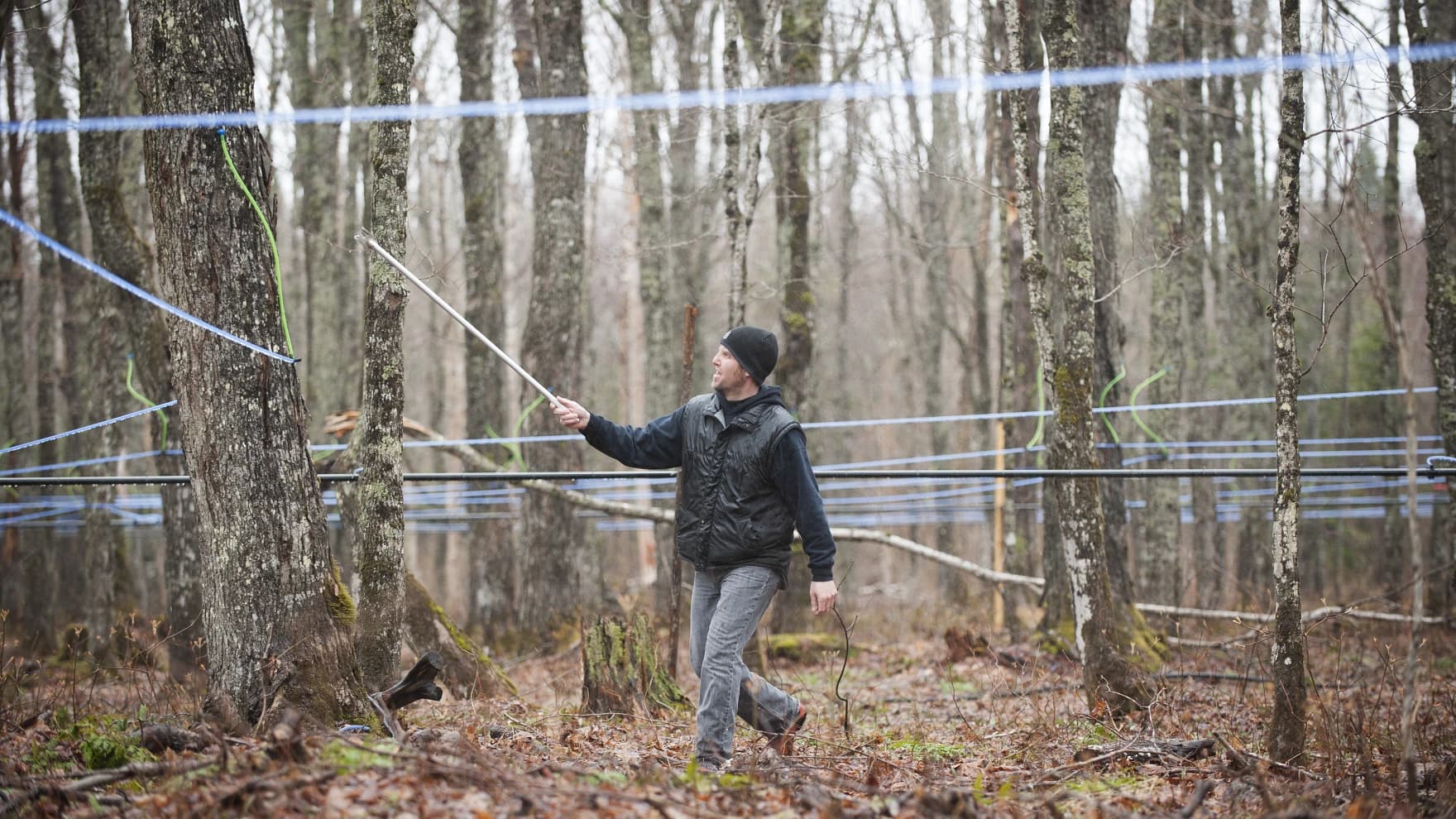
Maple sugarhouse with steam rising during Connecticut sugaring season.

Maple sugarhouses

Maple Sugarhouses in Connecticut: Syrup, Steam, Sugar Shacks, and Spring Farm Visits

Maple season in Connecticut has its own kind of beauty. It is quieter than fall, colder than berry season, and more connected to the work behind the farm. The best sugarhouse visits bring together steam, sap, syrup, woodsmoke, stainless evaporators, old buckets, maple candy, cream, sugar, and spring roads that are just waking up.

These sugarhouses, farm stores, and spring stops deserve their own mud-season weekend, not a footnote after fall.

Worth knowingSugarhouse hours follow sap weather in Connecticut. Weekend boiling days and retail hours are listed on each farm page.

What makes maple season different

Maple depends on a narrow seasonal rhythm. Cold nights and warmer days help sap move through the trees. Sugarhouses turn that sap into syrup through boiling and evaporation. A good visit lets you see the process, smell the steam, and bring home something that was made from the surrounding woods.

A strong maple stop may include:

  • Boiling demonstrations or a view of the evaporator
  • Pure maple syrup in different grades or bottle sizes
  • Maple cream, maple candy, maple sugar, maple cotton candy, or maple baked goods
  • Pancake breakfasts, maple donuts, sugar-on-snow, or farm store specials where offered
  • A scenic sugarbush road, farmstand shelf, or small-town route nearby

Maple season should feel like late winter and spring. It belongs to mud roads, smoke, steam, and quiet farm counters rather than hayrides and pumpkin fields.

New England maple sugarhouse chimney steam in Connecticut.

New England maple sugarhouse chimney steam in Connecticut.

Farm picks

Sugarhouses and maple farm stops to know

These sugarhouses and maple stops are grouped by town so you can string together a mud-season or spring drive.

Farm photography at The Farm, Woodbury CT, Woodbury, Connecticut.

Woodbury, CT

The Farm, Woodbury CT

The Farm in Woodbury gives the Connecticut maple route a anchor in a town already tied to farm roads, pumpkins, flowers, and a strong local-food landscape.

WoodburyCT
Farm photography at Lamothe's Sugar House, Burlington, Connecticut.

Burlington, CT

Lamothe's Sugar House

Lamothe's Sugar House is one of Connecticut's strongest maple names, with a family sugarhouse and more than 5,500 taps noted on its site.

BurlingtonCT
Farm photography at River's Edge Sugar House, Ashford, Connecticut.

Ashford, CT

River's Edge Sugar House

River's Edge Sugar House brings eastern Connecticut on the list with maple syrup, maple products, and a Route 89 address in Ashford.

AshfordCT
Farm photography at Sweet Wind Farm, East Hartland, Connecticut.

East Hartland, CT

Sweet Wind Farm

Sweet Wind Farm adds to the route a northern Connecticut maple stop with sugarhouse character and a town setting that feels closer to the hills than the.

East HartlandCT
Farm photography at Durham Sugarhouse, Durham, Connecticut.

Durham, CT

Durham Sugarhouse

Durham Sugarhouse adds a Middlesex County maple stop and a realistic inland route from the shoreline without a cross-state haul.

DurhamCT

Mapped farms

Connecticut maple sugarhouses on the map

Sugarhouses sit across hills and river valleys. Group a few pins that fit one sugaring weekend.

Map preview

The farm list is available now. Browse farms on this page or open the full map.

Regions

Best regions to plan around

Hartford and northern Connecticut

From Hartford, look toward Burlington, East Hartland, Andover, and the northern part of the state for maple stops with a stronger sugarhouse feel.

Quiet Corner and eastern Connecticut

Ashford, Woodstock, Thompson, and nearby towns give Connecticut maple a quieter backroad character. This route works well for if you want maple without driving into the Litchfield Hills.

Litchfield County and western farm roads

Woodbury and the western hills offer Connecticut's most scenic maple country, with farm stores, orchards, and sugarhouse roads close enough for a spring loop.

Sugar shack in winter snow for Connecticut maple syrup visits.
Maple sap buckets on trees in snowy woods during Connecticut sugaring season.

How to think about the Connecticut maple route

Connecticut maple works best by region. From Hartford, look north and west; from the shoreline, plan a longer inland drive; Litchfield County has the strongest sugarhouse-road feel.

You can think about maple in three ways. The first is the open sugarhouse, where seeing the boiling process is the main draw. The second is the farm store, where syrup and maple products are the reason to stop. The third is the scenic maple route, where a sugarhouse sits beside a backroad, village, farmstand, or local-food stop that makes the drive feel complete.

Maple breakfast spread for a Connecticut sugarhouse visit.

FAQ

Common questions

When is maple season in Connecticut?

Maple season usually belongs to late winter and early spring, when cold nights and warmer days help sap run. Public sugarhouse events often cluster in March, while syrup and maple products can be sold much longer at farm stores and sugarhouses.

What should you buy at a Connecticut sugarhouse?

Pure maple syrup is the anchor, but maple cream, maple candy, maple sugar, maple cotton candy, pancake mixes, local honey, and farm pantry goods can make the stop more memorable.

Can a maple guide include farms that are not only sugarhouses?

Yes. A farm stand, orchard, or farm store belongs in the route when it sells maple products, sits near a sugarhouse road, or helps you build a better spring farm stop.

Community

Share a field note

Save the maple stops that fit your route, then add a quick note after a visit. A syrup counter photo, sugarhouse detail, or product tip helps the next visitor find a better spring farm stop.