This guide is for travelers who want to build a farm stop into the Route 100 day without turning the drive into a complicated itinerary. Start with one region, choose a farm or orchard nearby, and leave time for the road itself.
Farms to know near Route 100 drives
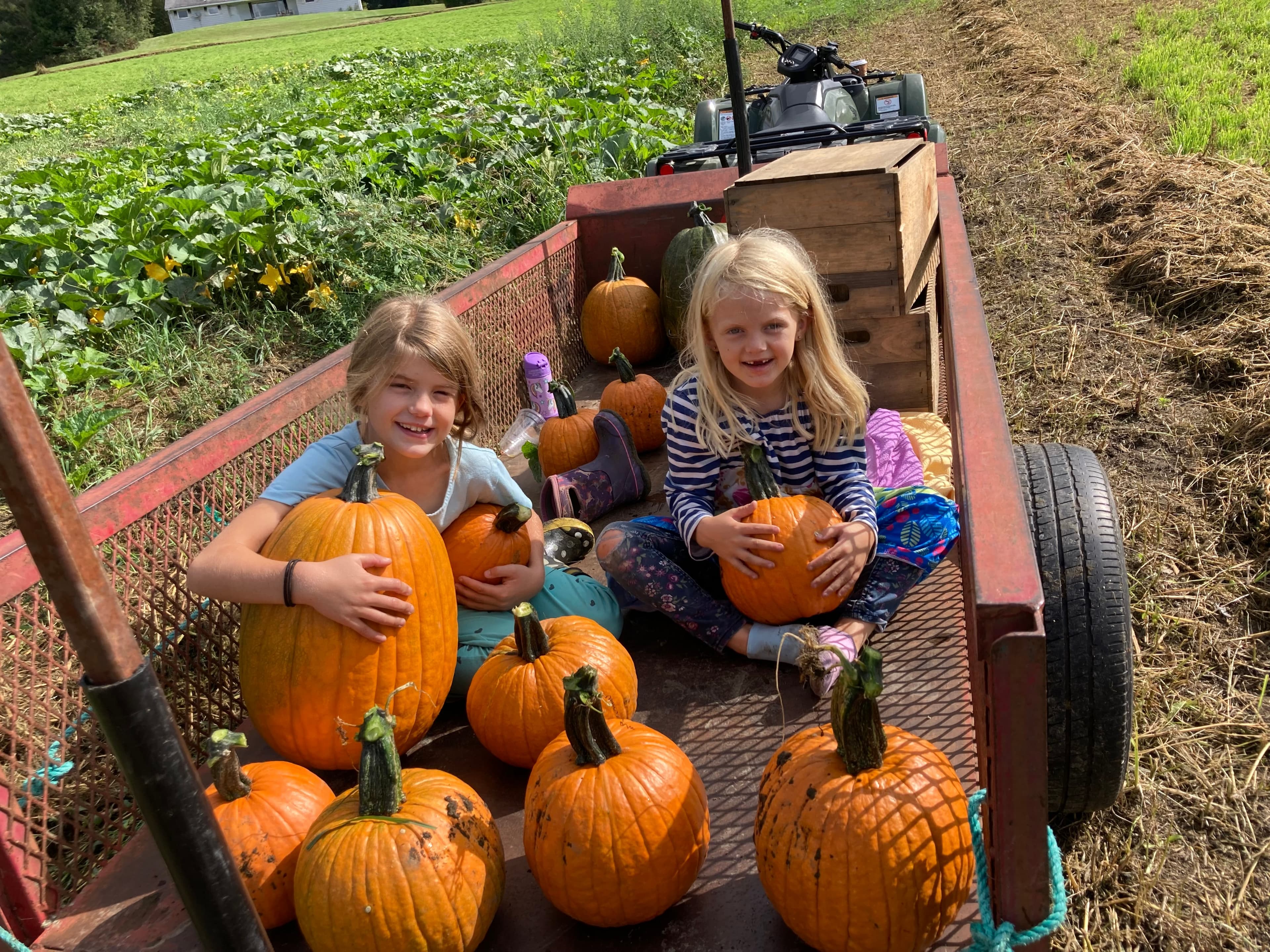
Burtt's Apple Orchard in Cabot gives central Vermont travelers a classic orchard stop with apples, pears, pumpkins, cider donuts, a farm store, and a farm stand. Cabot is not directly on every Route 100 path, but it works beautifully for a central Vermont farm detour with real apple-country texture.
Morse Farm Maple Sugarworks in Montpelier adds the maple side of Vermont farm travel. A maple stop works in almost any season because syrup, maple candy, creemees, and sugarhouse shelves do not depend on the same narrow window as berries or apples.
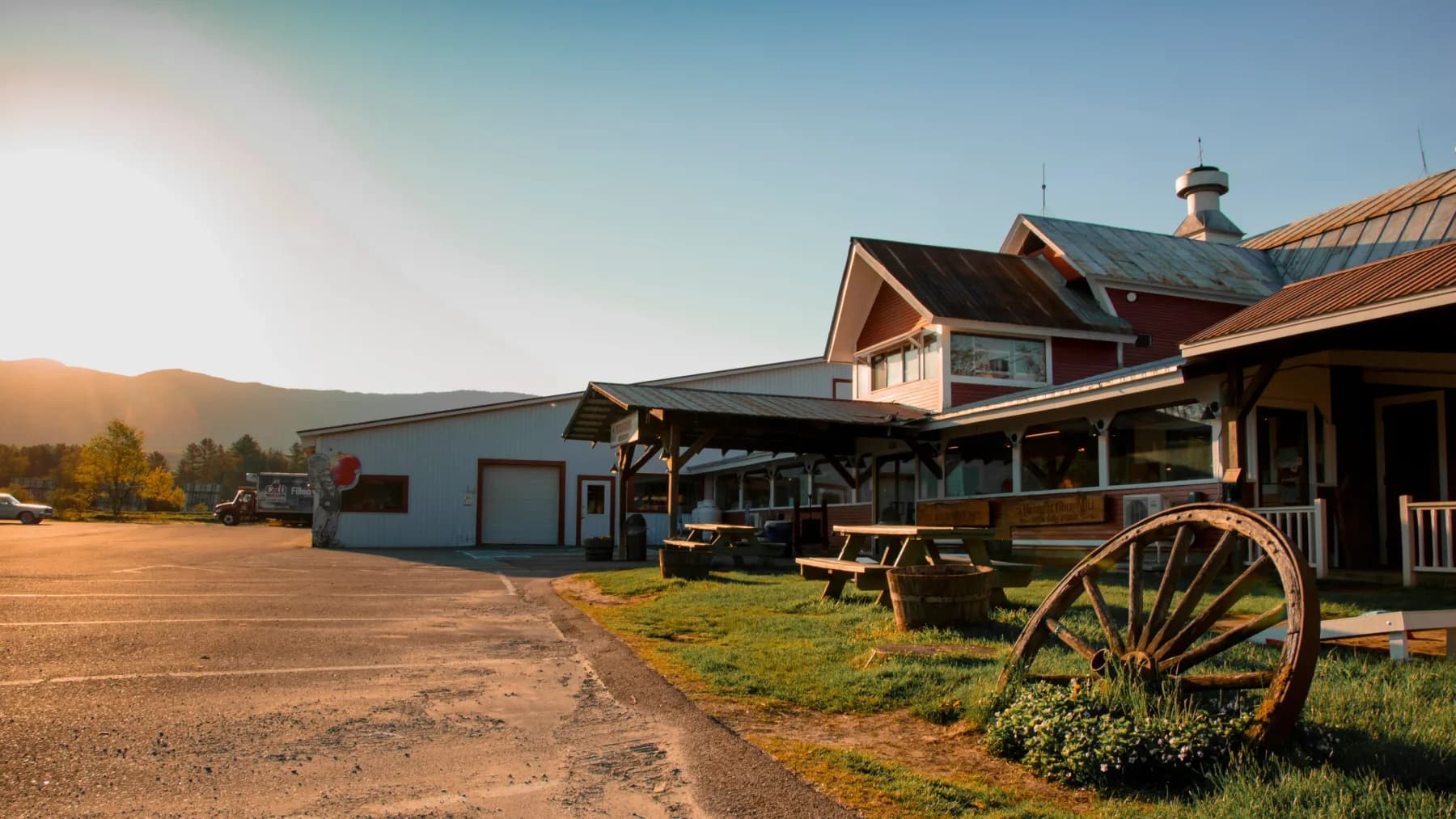
Cold Hollow Cider Mill in Waterbury is one of the most recognizable food stops near the Route 100 and Stowe corridor. It is useful for travelers who want cider, baked goods, local products, and a classic Vermont market stop without needing a full field visit.
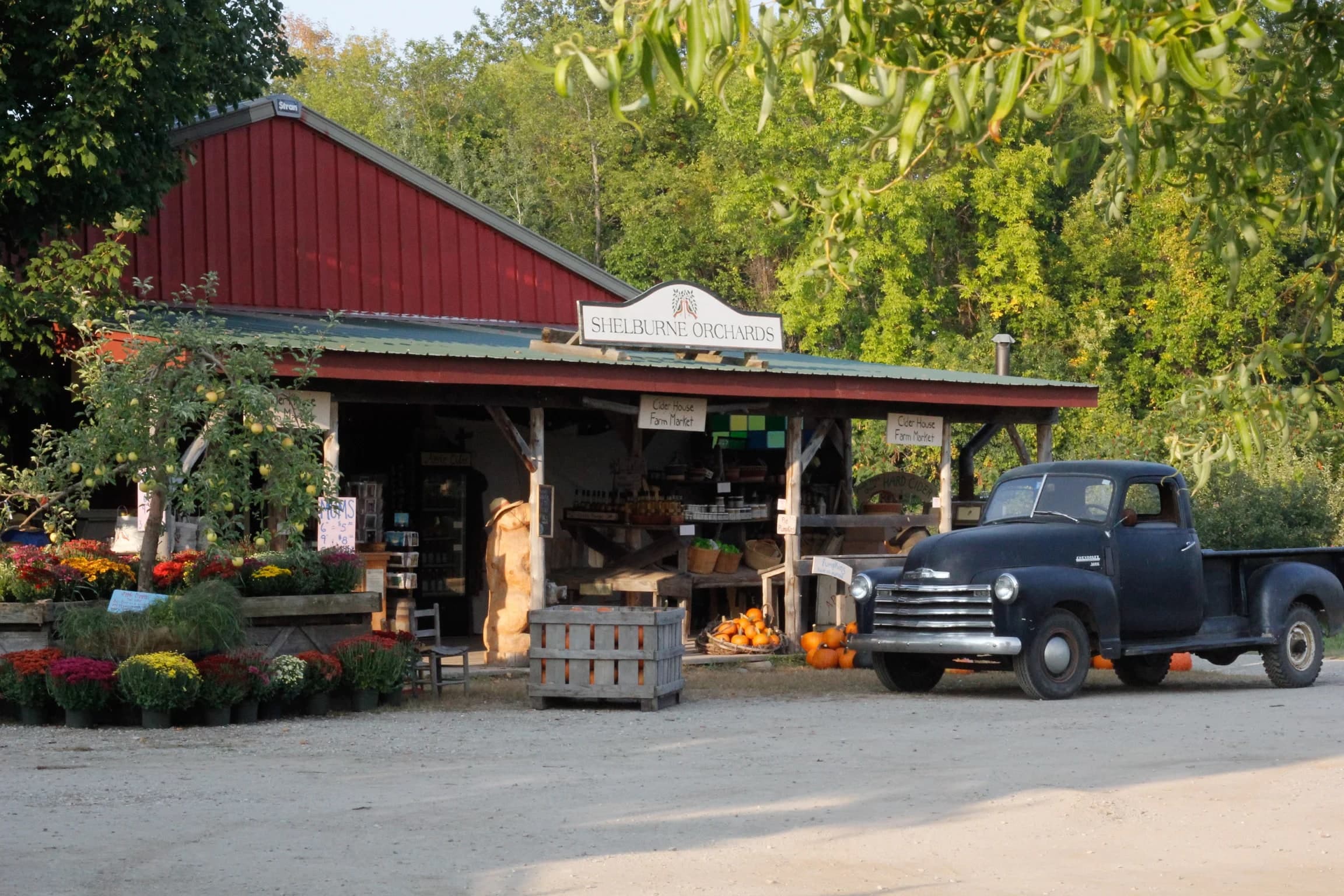
Shelburne Orchards sits west of Route 100, but it belongs here for travelers starting or ending a Vermont trip near Burlington and Lake Champlain. The profile highlights apples, peaches, plums, sour cherries, cider donuts, a farm store, and a long Shelburne orchard story.
Champlain Orchards in Shoreham is another west-side detour that pairs well with a broader Vermont road trip. It offers orchard range, cider, farm-market shopping, and Champlain Valley scenery for travelers who want to turn the drive into a food route.
Scott Farm Orchard in Dummerston anchors southern Vermont orchard travel, especially for readers beginning or ending a Route 100 trip near Brattleboro, Putney, or the Connecticut River side of the state.
When to go
Route 100 farm stops work from summer through fall. June and July bring berries, farm stores, creemees, and markets. August adds flowers, peaches, vegetables, and early apples. September and October are the main apple, cider, pumpkin, and foliage months.
If you are driving during peak foliage, choose one farm stop before you leave. Parking, lunch, and road traffic all take longer when the leaves are at their best.
What to bring home
Apples, cider, syrup, cheese, honey, maple candy, flowers, vegetables, and baked goods all travel well. Bring a cooler if you plan to buy cheese, meat, dairy, or prepared food before a long drive.
Common questions
Are there farms directly on Vermont Route 100?
Some farms and farm stores sit close to Route 100, while others make better side trips from the main road. The best plan is to choose a town or region first, then save a farm nearby.
What is the best season for Route 100 farm stops?
September and October are the most popular months, but summer farm stores, berry farms, maple stops, and creemee counters make the route useful earlier too.
Can you do Route 100 farm stops with kids?
Yes. Choose farms with a clear activity, such as apples, animals, cider, creemees, pumpkins, or a short farm-store stop.