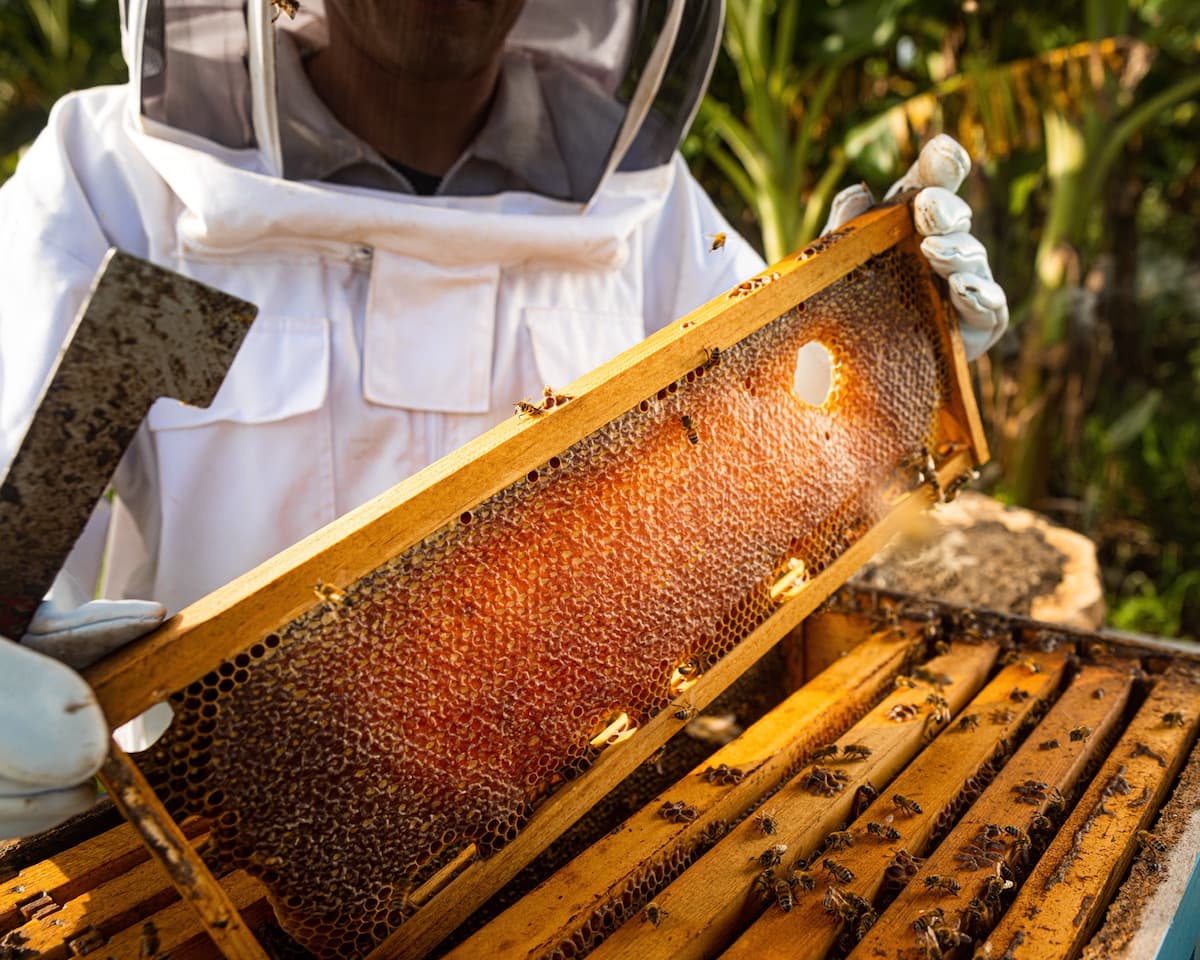
Pollinator on flowers near Maine apiaries and farm stands.

Local honey

Local Honey and Apiaries in Maine

Local honey is one of the easiest farm products to bring home from Maine. A jar fits in a tote bag, lasts for months, and carries the season with it. Clover, wildflower, apple blossom, goldenrod, basswood, and fall honey can all taste different because bees work what is blooming around them.

Honey shopping works well at farm stands, orchards, maple farms, farmers markets, and small stores that carry nearby products. These farm links Give you places to begin a local honey route while also finding produce, flowers, baked goods, eggs, maple, and seasonal farm items.

Worth knowingHoney and apiary retail hours follow bloom and bottling in Maine. Farm listings note stand hours and product availability.

The season at a glance

Honey is available through much of the year, but the buying experience changes by season. Spring brings lighter floral notes when available. Summer honey often tastes brighter and more varied. Fall honey can be deeper, darker, and more herbal. Holiday farm stores often carry honey alongside maple, jam, candles, and gift baskets.

Visitor in a sunny field on a Maine honey farm route.

Visitor in a sunny field on a Maine honey farm route.

Farm picks

Farms to know

These farms anchor this route. Start here, then follow the town, season, and nearby farms that match the trip you want to take.

Farm photography at Jordan's Farm, Cape Elizabeth, Maine.

Cape Elizabeth, ME

Jordan's Farm

Jordan’s Farm is a Cape Elizabeth farm with vegetables, flowers, pumpkins, prepared food, farm-store shopping, animals, and a useful Greater Portland location.

ME
Farm photography at Stutzman's Farm Stand & Bakery, Sangerville, Maine.

Sangerville, ME

Stutzman's Farm Stand & Bakery

Stutzman’s Farm Stand and Bakery is a Sangerville farm stand and bakery with berries, pumpkins, vegetables, honey, prepared food, and farm education.

ME
Farm photography at Bacon Farm Maple Products, Sidney, Maine.

Sidney, ME

Bacon Farm Maple Products

Bacon Farm Maple Products is a Sidney maple producer for Maine syrup shopping and sugaring-season drives.

ME
Farm photography at Frinklepod Farm, Arundel, Maine.

Arundel, ME

Frinklepod Farm

Frinklepod Farm is an Arundel organic farm and farm store connected to CSA pickup, produce shopping, and southern Maine local food.

ME
Farm photography at Little River Flower Farm, Buxton, Maine.

Buxton, ME

Little River Flower Farm

Little River Flower Farm is a Buxton flower farm that brings color, farm-stand appeal, and visual interest to Greater Portland routes.

ME

Mapped farms

Maine honey & apiaries on the map

Apiaries and farm stands are often rural — group stops with a scenic backroad.

Map preview

The farm list is available now. Browse farms on this page or open the full map.

Regions

Best regions to plan around

Portland, Casco Bay, and southern Maine

The Portland area is strong for farm stands, prepared food, vegetables, flowers, berries, and market stops that pair easily with beaches, breweries, and coastal towns.

Midcoast

The Midcoast has a small-town farm rhythm. Whitefield, Alna, Damariscotta, Brunswick, and the surrounding roads are good for farm stores, CSAs, flowers, meats, and slow food shopping.

Western Maine

Western Maine leans into orchards, maple, Christmas trees, and drives that climb toward foothills and ski towns. It is a good region when scenery matters as much as the farm stop.

Kennebec Valley and central Maine

Central Maine has room for larger farm operations, maple producers, orchards, greenhouses, meat farms, and family farm outings with a less crowded feel.

Bangor, Down East, and Aroostook routes

Northern and eastern Maine make farm travel feel tied to the wider landscape. Think orchards, potato country, wild blueberries, maple, farm stores, and seasonal stands spaced farther apart.

What makes local honey interesting

Honey is shaped by place. Bees gather nectar from what is blooming nearby, so the flavor can shift from farm to farm and month to month.

Raw, creamed, comb, infused, and wildflower honey all behave differently in the kitchen. Creamed honey spreads beautifully on toast. Darker fall honey can stand up to tea, roasted squash, marinades, and cheese boards.

Farm stores often carry honey from their own hives or from neighboring beekeepers. Either way, buying it through a farm keeps the purchase close to the local food system.

How to use it at home

Use lighter honey with yogurt, berries, biscuits, tea, and vinaigrettes. Use deeper honey with roasted carrots, winter squash, sharp cheese, ham, pork, barbecue glaze, or cornbread.

A jar of honey also makes a useful farm gift. Pair it with apples, maple syrup, jam, cider donuts, or a small bunch of flowers and it feels thoughtful without being fussy.

What to look for at farm stores

Look for labels that list the beekeeper, town, floral source when known, and whether the honey is raw, creamed, comb, or filtered. Clear labeling makes the purchase feel more connected and helps you remember what you liked.

Candles, beeswax products, pollen, and honey sticks often appear near the honey shelf. They can be small but memorable add-ons for kids, teachers, hosts, and holiday baskets.

How to choose a jar

Buy two small jars instead of one large jar when the farm carries different types. A lighter summer honey and a darker fall honey can taste surprisingly different.

Keep honey at room temperature. If it crystallizes, set the jar in warm water and stir gently.

In Maine, honey is often easiest to find at farm stands, orchards, maple farms, and markets that carry products from nearby beekeepers.

FAQ

Common questions

Where can I buy local honey in Maine?

Farm stands, orchards, maple farms, apiaries, farmers markets, and farm stores are all good places to look.

Does local honey taste different from store honey?

It can. Local honey often reflects nearby blooms and seasonal nectar sources, which means color and flavor may change through the year.

What is creamed honey?

Creamed honey is honey with a smooth, spreadable texture. It is excellent on toast, biscuits, cornbread, muffins, and waffles.

Community

Share a field note

Add a jar of local honey to the next farm stop, then notice how the flavor changes by season, town, and floral source.