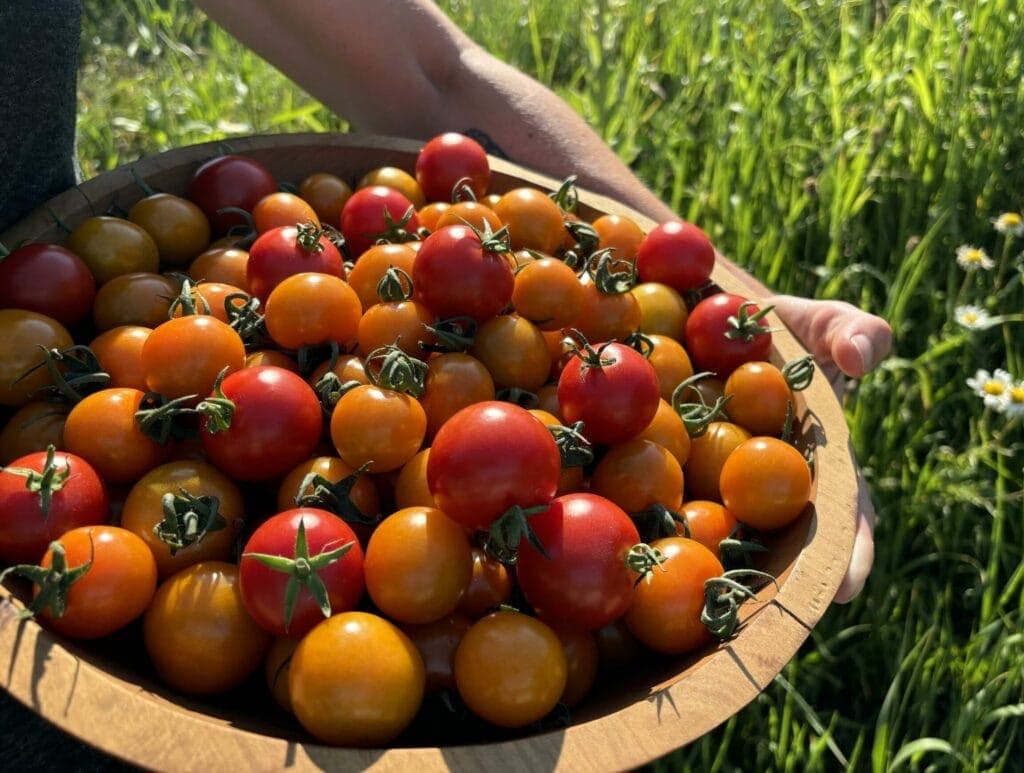
Fruit gets most of the attention in New England farm season, but vegetable picking has its own kind of pleasure. It is quieter. The baskets feel more like dinner than dessert. You leave with tomatoes for sandwiches, beans for a quick steam, herbs for the kitchen counter, and maybe a few flowers tucked into the same trunk.
Check the current farm update.Hours, picking conditions, tickets, and field access can change quickly. Use these cards and the map to build a short list, then confirm details on the farm page before driving.
Farm picks
Start with these farms
These are the farms this guide calls out directly, matched to live New England Farm Guide listings so you can compare photos, towns, current highlights, and route options in one place.
Marini Farm in Ipswich is a strong North Shore example because the farm profile includes vegetables, strawberries, lavender, pumpkins, a farm stand, and a bakery. It works well for people who want a farm visit that is more than one crop. In summer, the farm stand and field notes are the best place to look for what is ready.
Explore pick-your-own vegetables in New England, from tomatoes and sweet corn to herbs, flowers, farm stands, and summer field stops.
Pick-your-own vegetables are less common than strawberries or apples, and the rules vary from farm to farm. Some farms open fields for tomatoes, peppers, herbs, beans, or flowers. Others sell vegetables through a stand, a CSA pickup, or a market cooler. The best vegetable farms are worth checking often because the choices change quickly once July heat arrives.
Marini Farm in Ipswich is a strong North Shore example because the farm profile includes vegetables, strawberries, lavender, pumpkins, a farm stand, and a bakery. It works well for people who want a farm visit that is more than one crop. In summer, the farm stand and field notes are the best place to look for what is ready.
Houlden Farm in North Grafton is useful for central Massachusetts shoppers who want vegetables, field crops, and farm stand produce close to Worcester County. It is a practical stop when dinner is the goal, not a full afternoon outing.
B-Z-B Farm in Canterbury adds a Connecticut option with farm stand energy and local produce appeal. The Quiet Corner is full of small farm roads, and a vegetable stop can pair easily with other nearby farm markets or a weekend drive.
Houlden Farm in North Grafton is useful for central Massachusetts shoppers who want vegetables, field crops, and farm stand produce close to Worcester County. It is a practical stop when dinner is the goal, not a full afternoon outing.
B-Z-B Farm in Canterbury adds a Connecticut option with farm stand energy and local produce appeal. The Quiet Corner is full of small farm roads, and a vegetable stop can pair easily with other nearby farm markets or a weekend drive.
Jordan's Farm in Cape Elizabeth brings vegetables, berries, flowers, farm food, and a coastal Maine setting together. It is especially useful for Portland-area visitors who want a farm stop that can turn into dinner, not just a box of berries.
Brandon Family Farm in Rhode Island gives local shoppers a summer produce option in a small-state setting. Rhode Island farm visits are often short drives, which makes vegetable pickups and farm stand stops easy to fold into a beach day, errand loop, or weekend morning.
StrawberriesVegetablesFarm storeFarm stand
Mapped farms
Map this farm route
The map shows the farms linked in this guide across Massachusetts, Connecticut, Maine, and Rhode Island. Use it to spot clusters, then open each farm page for the most current visit details.
Pick two or three nearby farms from the map instead of trying to cover the whole guide in one day. New England farm routes work best when the drive is short and the stops have different strengths.
Confirm
Check same-day details
Look for crop updates, ticket rules, field closures, weather notes, and weekend parking guidance before you leave.
Bring
Pack for the season
Bring water, sun protection, closed-toe shoes, and a cooler if you plan to carry fruit, corn, cider, dairy, flowers, or prepared food between stops.
Jordan's Farm in Cape Elizabeth brings vegetables, berries, flowers, farm food, and a coastal Maine setting together. It is especially useful for Portland-area visitors who want a farm stop that can turn into dinner, not just a box of berries.
Brandon Family Farm in Rhode Island gives local shoppers a summer produce option in a small-state setting. Rhode Island farm visits are often short drives, which makes vegetable pickups and farm stand stops easy to fold into a beach day, errand loop, or weekend morning.
What usually comes into season
The early-summer table starts with greens, herbs, peas, and tender vegetables. By July, farm stands begin filling with cucumbers, summer squash, beans, early tomatoes, and sweet corn. August is the heavy month, with tomatoes, peppers, eggplant, melons, cut flowers, herbs, and full produce tables. September can still be excellent, especially for tomatoes, peppers, squash, and storage crops.
The exact mix depends on location. Southern New England often starts earlier. Hill towns, northern Vermont, northern Maine, and higher-elevation farms may run a little later.
Why vegetable farms are different from orchard trips
Vegetable farms reward repeat visits. Apples have a big annual moment. Vegetables move in waves. The farm stand can look completely different from one Friday to the next. That is part of the charm.
A July trip might bring cucumbers, greens, and the first cherry tomatoes. Two weeks later, the same farm may have slicers, basil, peppers, flowers, and sweet corn. By September, the table may shift toward winter squash, onions, potatoes, and late tomatoes.
How to shop like a regular
Bring a cooler if you are driving more than twenty minutes. Tomatoes should not be buried under heavier vegetables. Herbs like shade and a little moisture. Corn tastes best the day it is bought. Greens wilt fast in a hot car.
Ask where the farm wants customers to park, whether fields are open for picking, and whether containers are provided. Vegetable farms can be working spaces with tractors, irrigation, uneven ground, and active harvest crews. Stay in public areas unless the farm opens specific rows.
What to cook first
Start with the most fragile produce. Eat ripe tomatoes within a day or two. Use herbs while they are bright. Save squash, onions, potatoes, and winter vegetables for later in the week. A simple farm dinner can be sliced tomatoes, corn, basil, bread, cheese, and something grilled.
Questions people ask about pick-your-own vegetables
Are pick-your-own vegetables common in New England?
They exist, but they are less common than berry or apple picking. Many farms sell vegetables through farm stands, CSA shares, or markets instead of opening fields for public picking.
When is the best month for New England vegetables?
August is usually the fullest month. July brings the first strong summer wave, and September can still be excellent for tomatoes, peppers, squash, potatoes, and storage crops.
Can I pick tomatoes at farms?
Some farms offer tomato picking, while others sell tomatoes only at the stand. Check the farm's current update before going.
Should I bring cash?
Bring a card and cash. Larger stands often accept cards, but smaller roadside stands and honor boxes may still prefer cash or mobile payment.