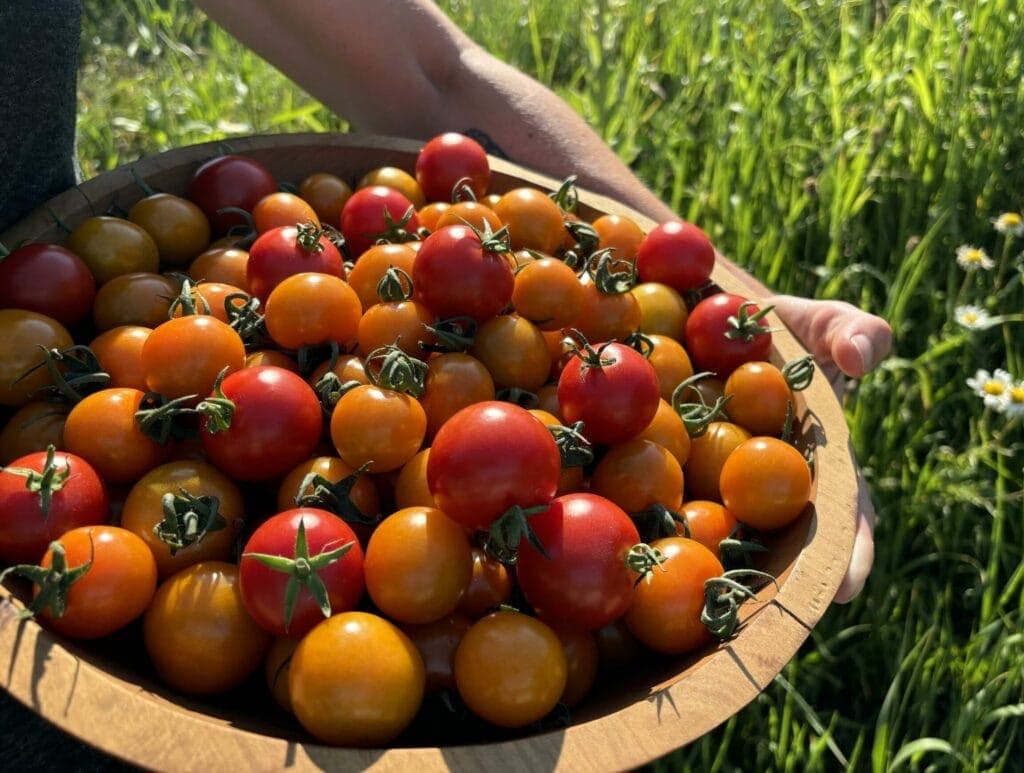
Tomato season usually begins in July, deepens in August, and can last into September. Farm stands may sell slicing tomatoes, cherry tomatoes, heirlooms, sauce tomatoes, and green tomatoes, sometimes all in the same week. Some farms open tomato rows for picking. Others keep the harvest at the stand so field crews can manage quality.
Farms and stands to watch
Marini Farm in Ipswich is a useful North Shore farm for vegetables, farm stand shopping, and summer outings. Its farm profile includes vegetables along with strawberries, lavender, pumpkins, a farm stand, and bakery offerings. During tomato season, the stand is the place to start.
Houlden Farm in North Grafton gives central Massachusetts shoppers a practical produce stop. It is a good kind of farm to watch in August, when dinner ingredients become the main reason to visit.
B-Z-B Farm in Canterbury is a Connecticut farm stand option for readers looking through the Quiet Corner. Tomato season fits naturally with that part of Connecticut, where local stands, small farms, and country roads make even an errand feel like a short drive out.
Jordan's Farm in Cape Elizabeth gives Maine readers a strong coastal produce stop. Its profile includes vegetables, corn, berries, flowers, prepared food, and a farm stand, which makes it especially useful for Portland-area cooks.
Morris Farm in Warwick brings tomato-season relevance to Rhode Island readers who want a local farm stop without a long drive. It works well as a practical summer grocery stop.
Brandon Family Farm adds another Rhode Island produce option for local shoppers. In late summer, small farm stands can be the best way to find tomatoes that still taste like the season.
When tomato season peaks
July usually brings the first local tomatoes. August is the month when stands feel abundant. September can still be excellent, especially for sauce tomatoes, heirlooms, and late varieties, though cool nights and storms can change quality quickly.
Greenhouse tomatoes may appear earlier, but field tomatoes are the flavor people wait for. The best field tomatoes often show up after steady heat and sun.
What to look for at the stand
A ripe tomato should feel heavy and smell like a tomato near the stem. Heirlooms may have cracks, odd shapes, or uneven colors, and that can be normal. Avoid tomatoes with soft wet spots or sour smells.
Do not refrigerate good tomatoes unless they are about to spoil. Keep them on the counter, stem side down if you want to protect the shoulders, and eat the ripest ones first.
What to buy for a tomato dinner
A tomato trip becomes easier when you think in meals. Buy basil, corn, cucumbers, lettuce, eggs, cheese, bread, or local meat if the farm carries them. A few pounds of sauce tomatoes can turn into freezer sauce. Cherry tomatoes can roast on a sheet pan with garlic and olive oil. Big slicers belong on toast, sandwiches, and plates with salt.
U-pick tomatoes versus farm stand tomatoes
Pick-your-own tomatoes are satisfying, but not every farm offers them. Tomato rows can be delicate, and farms may prefer to manage picking themselves. When fields are open, wear closed-toe shoes, bring water, and follow row signs carefully. If the farm sells only at the stand, that often means better sorting and less field damage.
Questions people ask about tomato season
When are tomatoes best in New England?
August is usually the best month. July brings the first field tomatoes, and September can still be strong when weather holds.
Are heirloom tomatoes better?
They are different. Heirlooms often have complex flavor and softer skins, while standard slicing tomatoes can be sturdier and easier for sandwiches.
Can I freeze tomatoes?
Yes. Core them first. You can freeze them whole, chopped, or cooked into sauce.
Should tomatoes go in the refrigerator?
Only if they are fully ripe and you need to slow spoilage. The counter is better for flavor.