Vermont Farm Guide
Farms in Vermont’s Northeast Kingdom: Maple Roads, Orchards, Dairy Country, and Quiet Farm Stops
Explore farms in Vermont’s Northeast Kingdom with maple sugarhouses, orchards, dairy farms, farm stores, and scenic rural stops across the northern counties.
Vermont’s Northeast Kingdom is one of the best parts of New England for farm trips that still feel personal, rural, and deeply tied to the land. The region stretches through Caledonia, Orleans, and Essex counties, with farms tucked along roads near St. Johnsbury, Lyndon, Cabot, Newport, Burke, Hardwick, and the Canadian border.
Start with farms to knowVermont’s Northeast Kingdom is one of the best parts of New England for farm trips that still feel personal, rural, and deeply tied to the land. The region stretches through Caledonia, Orleans, and Essex counties, with farms tucked along roads near St. Johnsbury, Lyndon, Cabot, Newport, Burke, Hardwick, and the Canadian border.
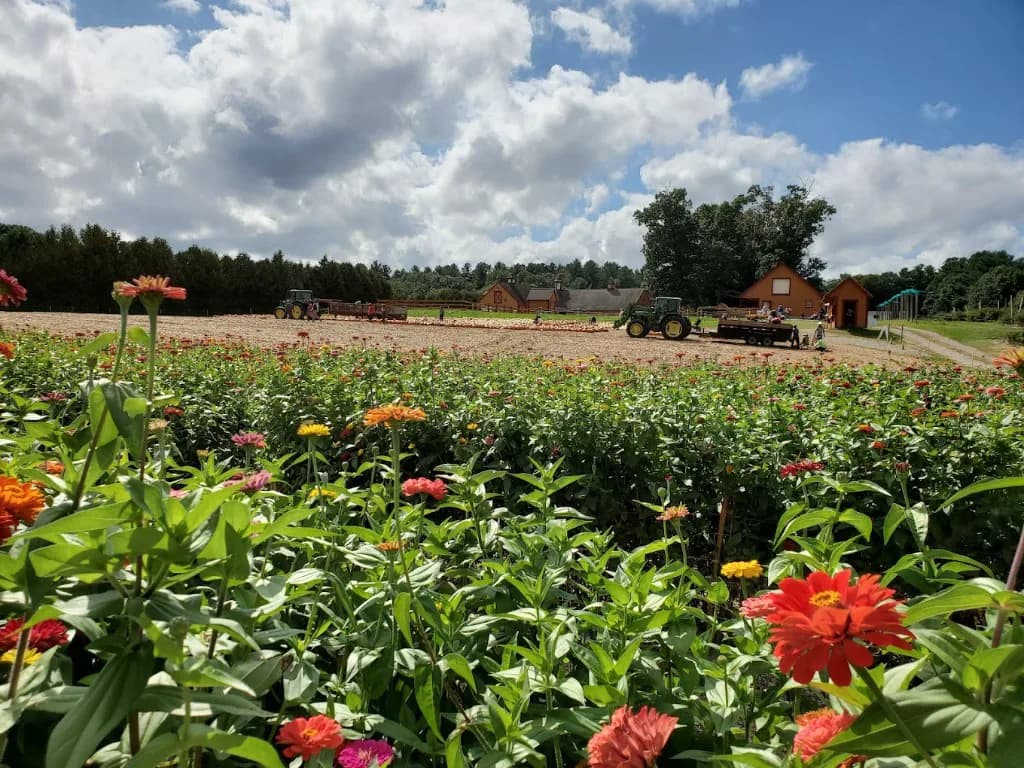
This is not a region built around one single farm attraction. Its strength is the whole landscape. Maple roads run through sugarbushes. Orchards appear near hill towns. Dairy farms and farm stores sit in working valleys. Small stands offer vegetables, eggs, honey, flowers, and seasonal produce when the weather cooperates. The Northeast Kingdom rewards slower travel, especially in late winter maple season, summer farm-stand season, and fall foliage.
Farms to know in the Northeast Kingdom
Burtt’s Apple Orchard
Burtt’s Apple Orchard in Cabot is one of the region’s most inviting orchard stops. The New England Farm Guide profile lists apples, pears, cider doughnuts, a farm store, and a farm stand. Cabot is already known for rural Vermont character, and the orchard gives visitors a seasonal reason to explore beyond the village center.
September and October are the natural months for a visit. Apples, pears, doughnuts, and fall color make the drive feel like exactly what people hope for when they picture northern Vermont in autumn.
Burke Mountain Maple
Burke Mountain Maple in East Burke brings the maple side of the Northeast Kingdom into focus. The region’s hills, cold nights, and rural roads make sugaring season feel especially connected to place. A maple stop here works beautifully during late winter and early spring, when steam, snowbanks, and sugarhouse shelves mark the beginning of Vermont’s farm year.
East Burke also has a strong outdoor identity, so a maple visit can pair naturally with skiing, biking, hiking, or a scenic ride through Burke and Lyndon.
Cabot Smith Farm
Cabot Smith Farm gives the Cabot area another agricultural anchor. Around Cabot, farm country feels especially close to the road. Fields, barns, working dairies, sugarhouses, and local food stops all sit within a landscape that still looks and feels productive.
This is the kind of farm area where visitors should look beyond a single attraction. The broader Cabot region is valuable because it combines orchard stops, dairy history, maple, small stands, and classic hill-town driving.
Corey’s Maple Orchard
Corey’s Maple Orchard in Enosburg sits outside the strict Northeast Kingdom boundary, but it is useful for travelers exploring northern Vermont farm country. The profile connects to maple, farm products, and the northern Vermont sugarhouse tradition.
For visitors moving between the Kingdom, the Northeast corner, and Franklin County, maple farms like this show how widely the sugarhouse landscape spreads across northern Vermont.
What makes the region special
The Northeast Kingdom is strongest for visitors who enjoy the drive as much as the destination. Farm trips here can include dirt roads, small villages, mountain views, lakes, and farm stores with local products that do not feel mass-produced. The region is especially appealing to people who want quieter farm experiences than the busier areas around Burlington or southern Vermont resort towns.
Late winter and early spring are best for maple. Summer brings farm stands, vegetables, flowers, berries, dairy, and local markets. Fall brings orchards, pumpkins, cider doughnuts, foliage, and some of the most memorable backroad farm scenery in New England.
Local planning notes
Distances can be deceptive in the Northeast Kingdom. Roads are scenic, but they are not always fast. Plan extra time between farms, especially if you are heading toward East Burke, Cabot, Newport, or more remote hill towns. The best days leave space for overlooks, village stops, and slow roads between farms.
In maple season, sugarhouses give the route its strongest early-year focus. In fall, orchard trips feel especially weather-shaped because northern Vermont color, frost, and apple timing can shift quickly.
Frequently asked questions
What farms are worth visiting in Vermont’s Northeast Kingdom?
Burtt’s Apple Orchard in Cabot and Burke Mountain Maple in East Burke are strong starting points. The region also has dairy farms, farm stores, small stands, and maple producers across Caledonia, Orleans, and Essex counties.
When is the best time to visit Northeast Kingdom farms?
Maple season in late winter and early spring is excellent. Summer is good for farm stands and local food. Fall is the strongest season for apples, foliage, cider doughnuts, pumpkins, and scenic farm roads.
Are Northeast Kingdom farms good for families?
Yes, especially families who enjoy scenic drives, orchards, maple products, farm stores, and quieter rural stops. With young children, the easiest profiles are the ones with bathrooms, animals, food, and short walking distances.
What towns are good bases for farm exploring?
St. Johnsbury, Lyndon, East Burke, Cabot, Newport, Hardwick, and nearby villages are useful bases for exploring farms, sugarhouses, orchards, and farm stores in the region.